
DOTr Secures Villar Group Land Donation to Resolve Right-of-Way Issues for LRT-1 Cavite Extension
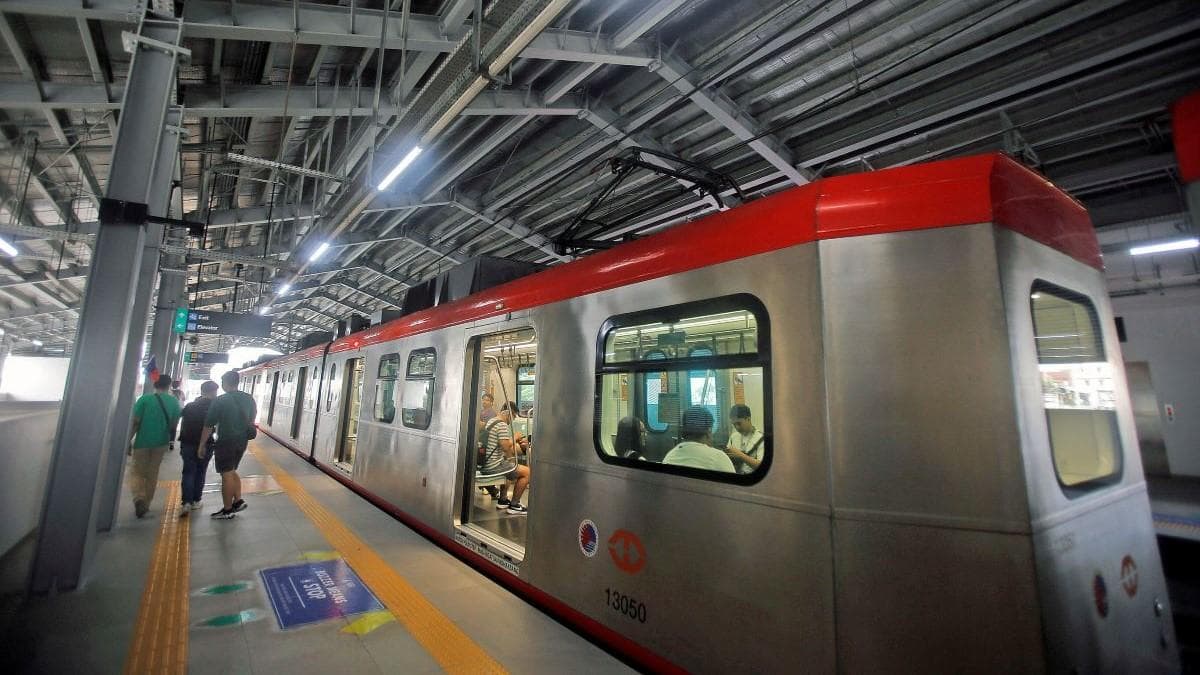
The Department of Transportation (DOTr) announced on August 7, 2026, that it has reached an agreement with the Villar Group of Companies for the donation of land parcels critical to resolving right-of-way (ROW) challenges along the Las Piñas alignment of the Light Rail Transit Line 1 (LRT-1) Cavite Extension project. This development marks a significant step forward in addressing longstanding ROW hurdles that have delayed the extension's progress.
The agreement was formalized during a meeting between Transportation Secretary Banoy Lopez and representatives of the Villar Group. The DOTr outlined three non-negotiable conditions for the land donation: the Villar Group must grant an unconditional permit for government access to the properties, waive any subrogation claims against the government, and ensure the cancellation of any mortgages on the donated parcels. The Villar Group agreed to these terms, which cover six parcels of land, two of which are currently mortgaged.
Secretary Lopez emphasized that this arrangement benefits multiple stakeholders, including the DOTr, the Light Rail Manila Corporation (LRMC), the Light Rail Transit Authority (LRTA), and the Villar Group, but most importantly, the commuting public. He highlighted that commuters are the primary beneficiaries and should remain the priority throughout the project.
The LRT-1 Cavite Extension project has been a priority under President Ferdinand “Bongbong” Marcos Jr., who last month directed Secretary Lopez to swiftly resolve ROW issues to ensure the extension's completion. The LRTA has committed to finishing the entire extension before the end of the current administration's term in 2028.
Phase 1 of the extension, which is already operational, connects Baclaran Station in Pasay City to Dr. Santos Station in Parañaque City, passing through five stations: Redemptorist-ASEANA, MIA Road, PITX, Ninoy Aquino Avenue, and Dr. Santos. The remaining phases, covering the Cavite leg, include three stations yet to be constructed: Las Piñas, Zapote, and Niog.
The Villar Group indicated that the cancellation of mortgages on the two encumbered parcels will be processed within six months. They have also identified replacement properties to facilitate the release of the land to be donated. The DOTr expressed confidence that the necessary legal agreements—including the Memorandum of Agreement, Right-of-Way Acquisition Agreement, and Deed of Donation—will be signed within the month, allowing construction to begin as early as next year.
LRMC president and CEO Enrico Benipayo, who attended the meeting, noted the urgency from the government to provide relief for passengers and acknowledged the Villar Group's good-faith negotiations with the grantors. He described the agreement as a major milestone that clears a significant hurdle for the project.
The LRT-1 Cavite Extension is financed through a hybrid scheme involving the national government, official development assistance from Japan via the Japan International Cooperation Agency (JICA), and the private operator LRMC. The P64.9-billion project was awarded to LRMC in September 2014 and was taken over by the private partner in September 2015.
Under the terms of the agreement, LRMC will manage the LRT-1 for 32 years and extend the line by 11.7 kilometers, increasing its length from the current 20.7 kilometers to 32.4 kilometers. This extension is expected to significantly improve transit connectivity for commuters traveling between Metro Manila and Cavite.
AI-assisted original article by 1news, based on reporting from GMA News Online. Featured image credited to the source.