
Drought in Central and Southeastern Europe Triggers Severe Electricity Crisis
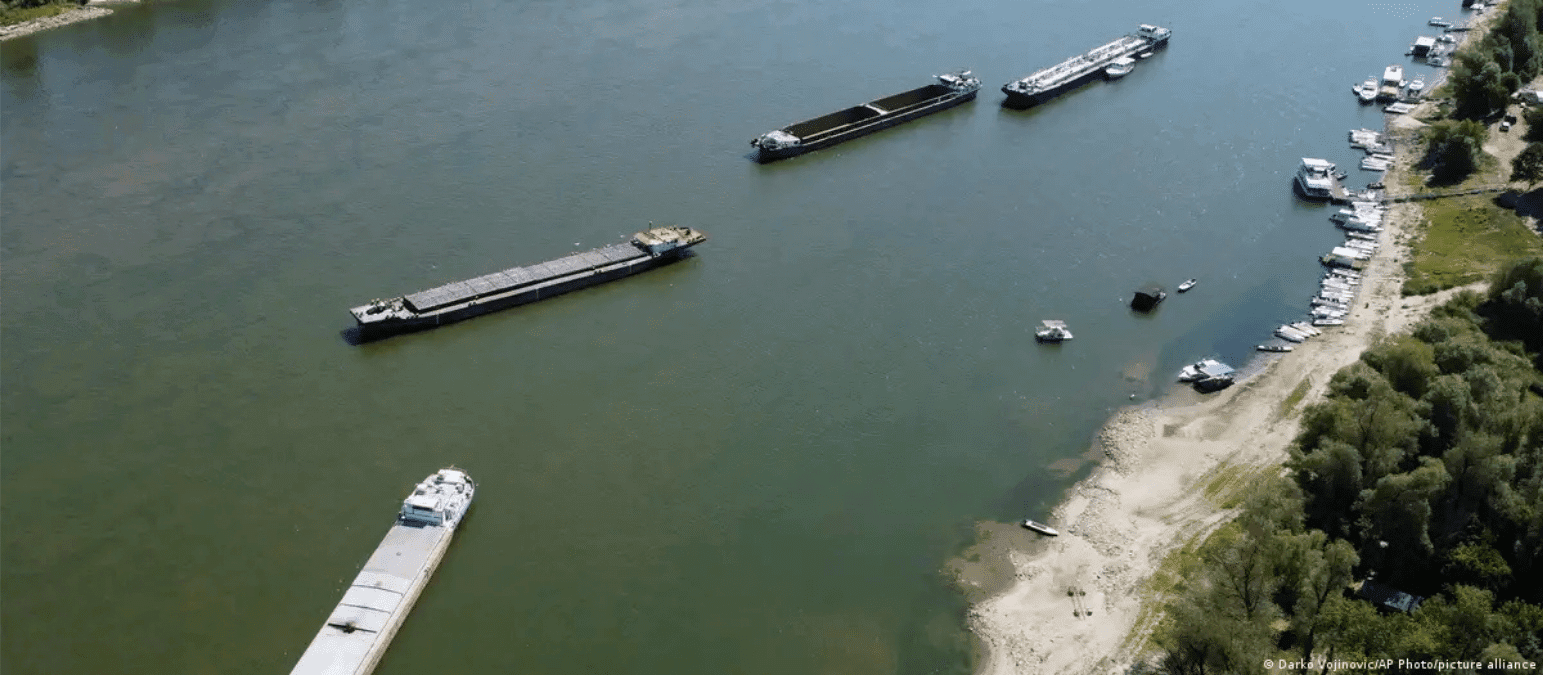
Central and Southeastern Europe are grappling with a severe drought that has drastically reduced river levels, melted asphalt, and dried up fields, causing widespread damage to the region’s economy and infrastructure. The prolonged lack of rainfall combined with intense heatwaves has led to significant disruptions, particularly in agriculture and electricity generation.
Agricultural yields, especially maize and sunflower crops, are expected to be well below average across Southeastern Europe. The heatwaves have also repeatedly disrupted transportation networks, including road, rail, and shipping routes. However, the most critical impact has been on electricity production, where historically low water levels in the Danube River have forced companies to halt operations in several countries.
Hungary and Romania are the hardest hit by the energy crisis, with Austria, Slovakia, Serbia, and Bulgaria also affected but to a lesser extent. Hungary faces the most severe drought conditions, with temperatures reaching as high as 43 degrees Celsius in Budapest and widespread rainfall shortages for months. The Danube’s record-low water levels have forced the Paks nuclear power plant, which supplies about half of Hungary’s electricity and one-third of its consumption, to reduce output to roughly 12% of capacity. The plant’s cooling system depends on Danube water, which is now insufficient and too warm, threatening a complete shutdown if conditions worsen.
The Hungarian government has responded by urging large energy consumers to reduce electricity use. Major manufacturers such as Audi Gyor and the oil and gas company MOL have scaled back production. Hungary’s energy crisis is exacerbated by its energy mix, which relies heavily on the Paks plant and lacks sufficient storage for solar energy, modern gas-fired plants, and wind or hydropower capacity. Restarting the Paks plant fully will take considerable time even if water levels improve, meaning Hungary will need to import electricity at high prices for weeks. The government under Prime Minister Péter Magyar has announced a comprehensive review of the country’s energy strategy in response.
Romania is experiencing a similar but somewhat less severe crisis. The Cernavoda nuclear power plant, which provides about 20% of Romania’s electricity, has taken one of its two reactors offline due to low Danube water levels. Authorities have taken emergency measures, including blasting rock formations and dumping rocks into the river to divert more water toward the plant’s cooling system. Romania’s energy mix is more balanced, with hydropower, nuclear, natural gas, coal, and wind power, but its reliance on hydropower—especially from the Iron Gate plant on the Danube—makes it vulnerable to drought. Several large companies, including Dacia and Ford Romania, have reduced production, and the government has warned it may order factory shutdowns if necessary.
Serbia is also suffering from drought and low Danube levels. Its energy production depends heavily on coal-fired plants (65%) and hydropower (25%). The Iron Gate hydropower plants are producing far less than usual, and coal plants that rely on Danube water for cooling have cut back output. The Danube’s low water level has also reduced cargo vessel loads, affecting coal and petrochemical transport. Despite these challenges, Serbia has not yet seen major industrial production cuts.
Slovakia’s energy situation is less critical due to its nuclear plants’ use of cooling towers rather than once-through river water cooling. These towers recirculate water in a closed system, reducing dependence on river water. However, the Gabcikovo hydropower plant on the Danube is operating at reduced capacity, with only one of eight turbines running. Slovakia has avoided significant industrial disruptions so far.
Austria, which generates about 60% of its electricity from hydropower, has been less affected because a significant portion of its hydropower comes from storage and pumped-storage plants. These facilities can use stored water to generate electricity during droughts, unlike run-of-river plants that depend directly on river flow. Austria also produces around 30% of its electricity from other renewable sources.
Bulgaria stands out in the region for its resilience. The Kozloduy nuclear power plant, which supplies up to 40% of the country’s electricity and also uses Danube water for cooling, is operating near full capacity due to a cooling system better adapted to low-water conditions. Bulgaria relies less on hydropower and has expanded solar and wind energy capacity in recent years. Crucially, Bulgaria has large-scale battery storage facilities with a capacity of 3.4 gigawatts and 8.6 gigawatt-hours of storage, representing 16% of its total installed power capacity—unmatched by any other country in the region. These storage systems help balance supply shortages and peak demand without costly imports, positioning Bulgaria as a regional leader in energy innovation and grid stabilization.
The drought and heatwave crisis in Central and Southeastern Europe highlights the vulnerability of energy systems dependent on river water for cooling and hydropower generation. Countries with diversified energy mixes and advanced storage capabilities, like Bulgaria, are better equipped to manage such extreme weather events. Meanwhile, Hungary and Romania face ongoing challenges that will require continued electricity imports and strategic energy planning to mitigate future risks.
AI-assisted original article by 1news, based on reporting from INQUIRER.net. Featured image credited to the source.