
Iran Escalates Threats Against US with Economic Warfare and Missile Strikes Amid Regional Tensions
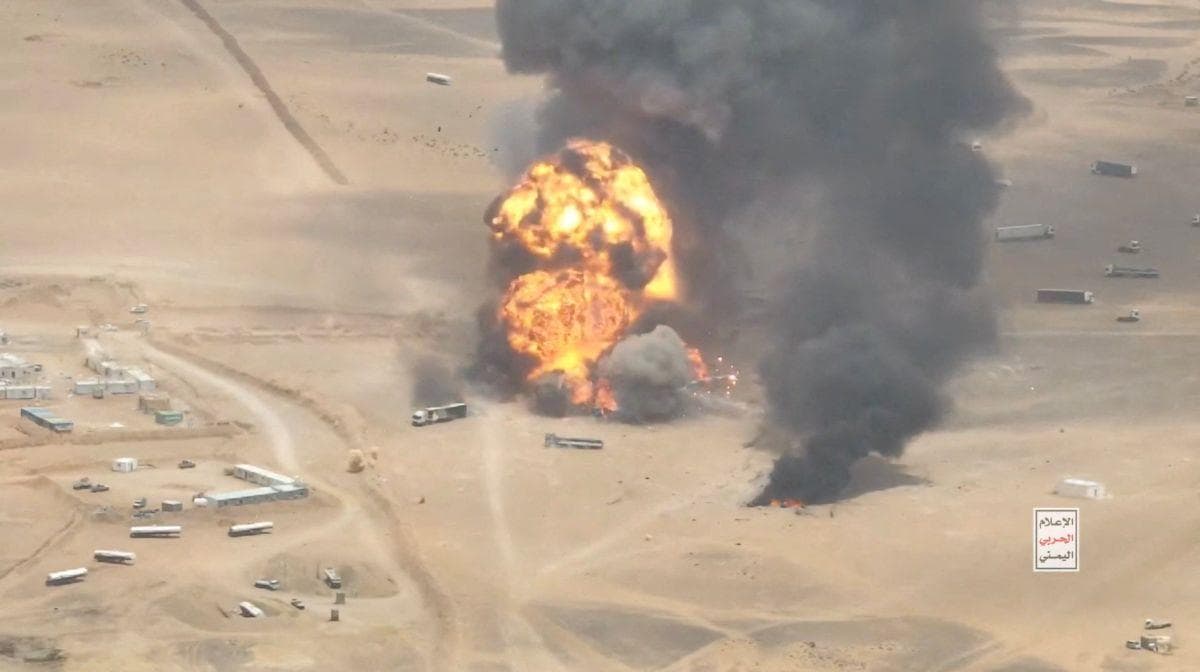
Iran intensified its confrontation with the United States on Tuesday by threatening economic warfare and confirming it had launched an advanced missile at US warships, highlighting the growing risks of escalation in the ongoing conflict. This development comes just days after both sides exchanged attacks, continuing a six-month cycle of intermittent hostilities punctuated by brief pauses.
The US last reported military strikes on Iranian targets on Saturday, when American forces targeted three Iranian oil tankers. Iranian state media subsequently reported that the Islamic Republic fired the Qassem Basir missile during attacks on multiple US vessels near the Strait of Hormuz, a critical maritime chokepoint for global energy supplies. The US military stated its warships successfully evaded the missile attacks.
Adding to regional instability, Iran-backed Houthi militias launched assaults on several Saudi Arabian cities, injuring 73 people, according to a spokesperson for the Saudi-led coalition in Yemen. This expansion of hostilities underscores concerns that the conflict could widen into a broader regional war amid stalled diplomatic efforts.
Despite US attempts to secure the Strait of Hormuz for international shipping, Iran has continued to disrupt maritime traffic through the vital waterway. Commodity vessel movements have slowed again this week, reflecting Tehran’s ongoing efforts to assert control over the passage.
Iran has announced plans to establish a new restricted zone in the Gulf, accompanied by maps outlining a new shipping corridor through the Strait of Hormuz. Mohsen Rezaei, secretary of Iran’s Supreme National Security Council, told state television that the restricted zone would start from the point where the US blockade of Iran begins and extend into parts of the Gulf. He warned that any vessel entering this zone would be added to an Iranian sanctions list, though specific details and timing for the announcement remain unclear.
On Tuesday, Rezaei reiterated both economic and military threats on the social media platform X, stating that recent missile launches served as a clear warning to Washington. He indicated that Iran would respond to economic warfare with a maritime exclusion zone encompassing the Persian Gulf up to the blockade perimeter. He also said Iran’s operational posture toward US warships and bases had been fundamentally recalibrated.
The missile referenced by Rezaei is likely the Qassem Basir ballistic missile, which Iranian media reported was fired at US warships near the Strait of Hormuz. This missile is described as an upgraded weapon with enhanced maneuverability designed to evade missile defense systems, featuring a guidance system resistant to electronic warfare. Iranian news agency Fars reported that the missile’s first combat use occurred in June 2025 against Israel.
Despite significant US military strikes that have degraded Iran’s conventional forces and severely impacted its economy, Tehran has maintained missile and drone capabilities sufficient to threaten oil tankers transiting the Strait of Hormuz without its consent and to target Gulf neighbors hosting US military bases.
Before the conflict, approximately one-fifth of global oil and liquefied natural gas shipments passed through the Strait of Hormuz, giving Iran leverage to threaten tankers from neighboring Gulf states attempting to export energy resources. This dynamic has contributed to rising energy prices amid the war, which remains unpopular in the US and poses political risks for President Donald Trump’s Republican Party ahead of the November congressional elections.
President Trump has asserted on social media that oil prices will fall sharply once the US wins the war with Iran, predicting gasoline prices could drop to three dollars a gallon or lower. However, his administration has yet to achieve its stated objectives since launching "Operation Epic Fury" in February, which aimed to end Iran’s nuclear program, halt its regional attacks, and foster conditions for regime change in Tehran.
Iran’s clerical leadership remains firmly in power and appears determined to emerge from the conflict stronger. Tehran continues to demand relief from US sanctions and hopes to eventually collect fees from ships using the Strait of Hormuz, signaling its intent to maintain influence over this strategic maritime corridor.
AI-assisted original article by 1news, based on reporting from GMA News Online. Featured image credited to the source.