
Japan Earthquake Survivors Struggle with Water Shortages and Heat as Death Toll Reaches 25
AI-assisted original article by 1news, based on reporting from GMA News Online. Featured image credited to the source.
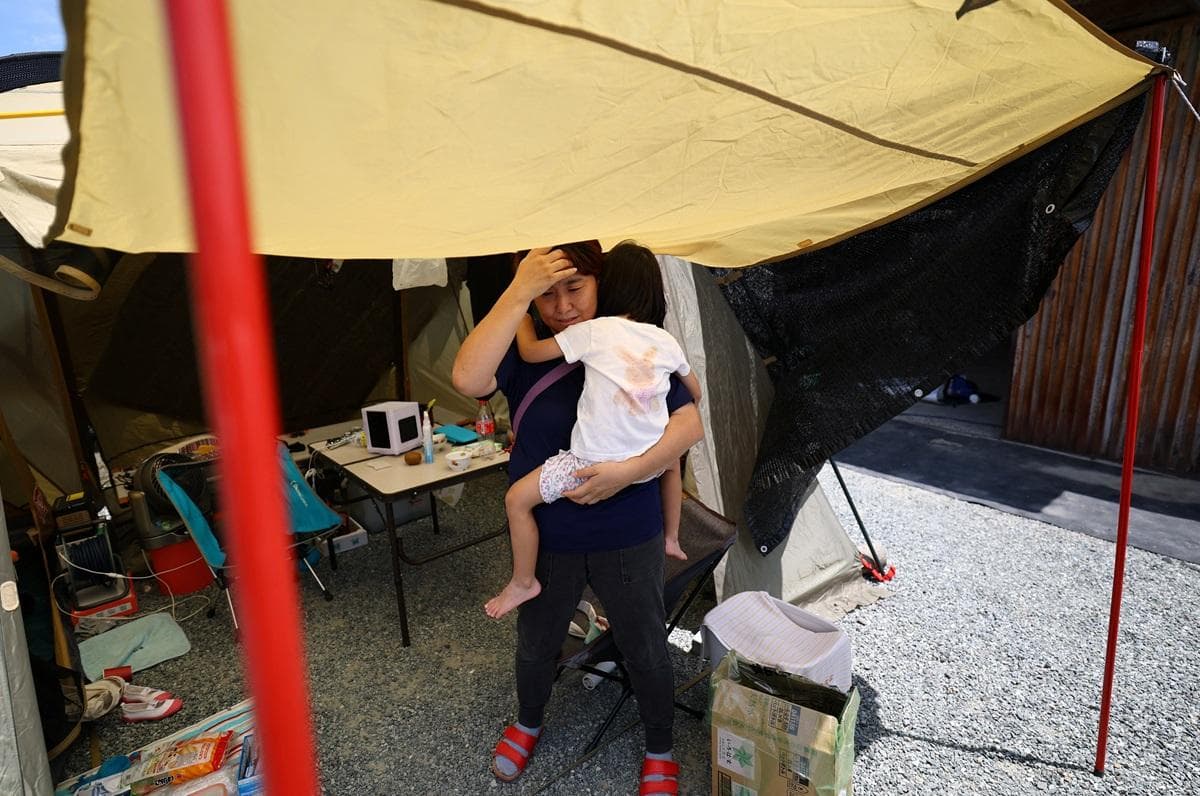
YATSUSHIRO, Japan — Two days after a powerful 7.1-magnitude earthquake struck Kumamoto prefecture in southern Japan, survivors in the small city of Yatsushiro continue to face severe challenges amid soaring summer temperatures. The quake toppled houses and cracked streets, but the more pressing concerns now are the lack of running water and electricity, which have left many residents vulnerable to heat-related illnesses.
Approximately 58,000 households in Yatsushiro remain without water or power, complicating relief efforts and daily life. Akio Matsushita, a local official involved in coordinating aid, acknowledged the uncertainty surrounding the restoration of damaged water mains, stating that repairs could take days, weeks, or even months. He emphasized the particular hardship caused by the summer heat and water shortages.
With the city hall’s plumbing out of commission, officials installed emergency toilets over sewer manholes outside the building, despite temperatures reaching around 35 degrees Celsius (95 degrees Fahrenheit) and high humidity. Matsushita described the repair work as painstaking and without a clear timeline for completion. Meanwhile, Kyushu Electric Power aims to restore electricity by Friday evening, according to a company representative.
The Kumamoto prefectural government reported that the earthquake has claimed at least 25 lives, with the majority of fatalities occurring at Nippon Paper Industries’ paper mill, which suffered significant structural damage, and at Aeon’s shopping mall, where a suspected gas explosion followed the tremor. Authorities are investigating nine additional deaths to determine if they are related to the earthquake.
Among the victims was a newlywed Vietnamese factory worker, survived by his wife and their seven-month-old child. His wife, Vu Thi Thuy, recounted their last video call the night before the quake, noting that their son unusually remained focused on the screen, a moment she now cherishes as their final conversation.
The Self-Defense Forces (SDF), Japan’s military, have mobilized to assist relief efforts by delivering water tanks to community centers and schools throughout Yatsushiro. Residents have been rationed to five liters of water each. The SDF is also installing approximately 300 air-conditioning units in evacuation centers and other critical locations to mitigate the risk of heat stroke, as temperatures are forecast to approach 40 degrees Celsius over the weekend.
Masahiro Miyamoto, a local resident who had been clearing debris from a collapsed temple gate, returned home after the quake to find his house intact but his neighbor’s home destroyed. Without running water, he has relied on water supplied by military tankers. He described the scarcity of supplies, with the few open shops crowded and long lines forming at petrol stations. Miyamoto reflected on the inevitability of such disasters in Japan, given its location on the Pacific “Ring of Fire,” an area prone to frequent seismic activity.
The Kumamoto region and surrounding areas in Kyushu have become important hubs for automobile and semiconductor manufacturing. The earthquake has forced major companies, including Toyota, Honda, Nissan, Aisin, and Sony, to halt some production lines. Taiwan’s TSMC also evacuated workers and temporarily suspended operations to assess damage. Chief Cabinet Secretary Minoru Kihara stated that it is currently difficult to gauge the full economic impact but emphasized the government’s priority to restore infrastructure and monitor supply chains closely.
Residents like Miyamoto, who experienced the devastating 2016 Kumamoto earthquakes that killed over 260 people, noted that this recent quake felt more intense locally. He described the sensation as his body becoming weightless and being thrown through the air, underscoring the quake’s severity despite fewer casualties this time.
As rescue and recovery operations continue, officials remain focused on addressing the immediate needs of survivors while preparing for the challenges posed by the extreme summer heat and ongoing infrastructure damage.