
Myanmar’s Min Aung Hlaing Seeks ASEAN Legitimacy During Thailand Visit
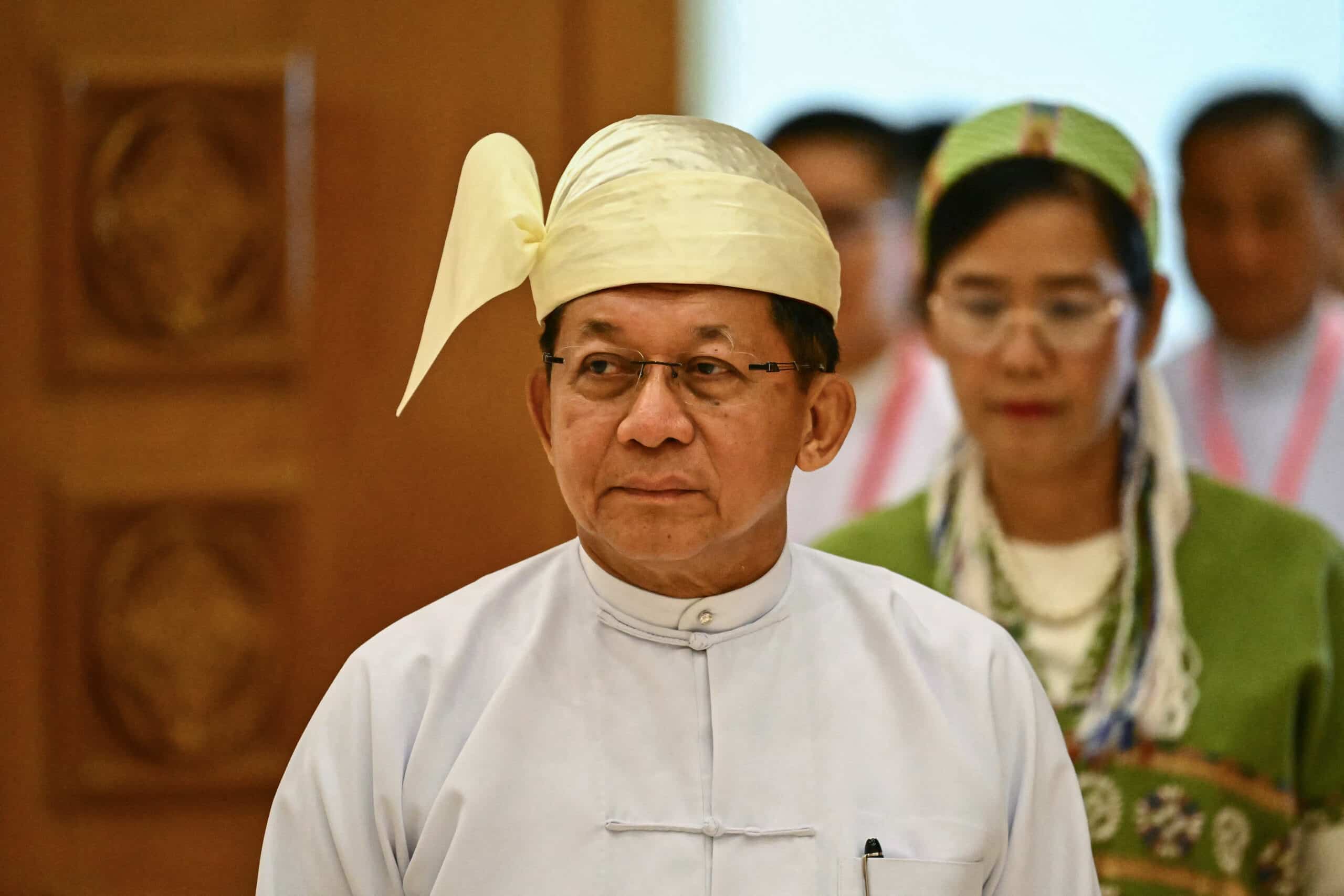
Myanmar’s junta chief turned president, Min Aung Hlaing, concluded a two-day visit to Thailand on Friday, marking his first trip to the neighboring country as a civilian leader. Experts told DW that the visit was part of his effort to recast himself as the head of a civilian government after years of diplomatic isolation.
Upon arrival in Bangkok on Thursday, Min Aung Hlaing received a reception befitting a visiting head of state, including a red carpet welcome, honor guard, national anthems, and photo opportunities with Thai Prime Minister Anutin Charnvirakul. This display of formal recognition contrasts with his previous diplomatic isolation following the 2021 military coup in Myanmar.
Moe Thuzar, head of the Myanmar Studies Program at Singapore’s ISEAS-Yusof Ishak Institute, explained that Myanmar’s capital, Naypyidaw, views engagement with neighboring countries as a form of acceptance. Min Aung Hlaing is leveraging bilateral relations with neighbors who have specific interests to gain greater acceptance of his administration from external partners.
Since the military coup in 2021 that overthrew a democratically elected government, Myanmar has been embroiled in a brutal civil war between the military and armed resistance groups. The conflict has resulted in an estimated 100,000 deaths and displaced over 3 million people. Western countries have imposed multiple rounds of sanctions on Min Aung Hlaing’s regime for alleged war crimes and human rights abuses, allegations the government denies.
In 2024, the International Criminal Court’s then-chief prosecutor requested an arrest warrant for Min Aung Hlaing for crimes against humanity related to the persecution of Rohingya Muslims. Meanwhile, the Association of Southeast Asian Nations (ASEAN) has barred him and his foreign minister from attending its leaders’ summits due to his failure to comply with a peace plan agreed upon in 2021.
In an attempt to break out of isolation, Myanmar held staggered elections in late 2025 and early 2026, which were widely criticized by the United Nations and Western governments as a sham designed to legitimize continued military rule. The military-aligned Union Solidarity and Development Party won over 80% of parliamentary seats, enabling Min Aung Hlaing’s election as president in April 2026. Myanmar’s government rejects criticism of the electoral process, asserting that the elections are part of a transition to civilian rule and a return of power to the people.
Since assuming the presidency, Min Aung Hlaing has made official visits to India, China, Laos, and now Thailand. Bangkok has been advocating for peace efforts in Myanmar’s civil war and for Myanmar’s reengagement with ASEAN. Wai Yan Phyo Naing, a visiting scholar at Taiwan’s Academia Sinica, noted that Min Aung Hlaing’s visit to Thailand is also about seeking legitimacy within ASEAN, as Thailand is a founding member with significant influence in the bloc.
Min Aung Hlaing can demonstrate to other ASEAN members that Thailand and Laos have engaged with him, challenging them to recognize the reality of his leadership rather than deny his legitimacy. However, both Moe Thuzar and Wai Yan Phyo Naing agree that ASEAN, which did not officially endorse Myanmar’s recent elections, is unlikely to allow Min Aung Hlaing to return to its leaders’ summits soon.
ASEAN continues to insist that Myanmar make meaningful progress on a peace plan agreed upon shortly after the coup, a plan Min Aung Hlaing has repeatedly dismissed, most recently just before his Thailand visit. Nevertheless, Min Aung Hlaing may be hoping that his official trips abroad as president will help convince ASEAN to accept his government on its own terms, according to Moe Thuzar.
Regardless of ASEAN’s stance, Min Aung Hlaing aims to strengthen bilateral relations with Thailand, which shares a 2,400-kilometer land border with Myanmar. The visit included a business forum on Thursday for Thai and Myanmar companies. Moe Thuzar highlighted that the focus on trade and economic deals reflects both countries’ interest in prioritizing economic engagement and addressing border trade concerns.
Thailand is among Myanmar’s top trade partners and foreign investors, particularly in energy projects vital to both countries. A Thai company operates two of Myanmar’s main gas fields, which supply much of Thailand’s natural gas. Independent Myanmar analyst David Mathieson, based in Thailand, said that convincing investors to stay or attract new ones helps shore up support for Min Aung Hlaing among economic elites, a key constituency for maintaining his rule.
Mathieson emphasized that despite Min Aung Hlaing’s official civilian title, he remains a military dictator who requires cooperation from economic elites to maintain power. He described the international response as cynical, acknowledging the facade of legitimacy but continuing business as usual. However, Mathieson noted that this approach does not benefit the 54 million people of Myanmar but rather supports Min Aung Hlaing and the system that sustains him.
AI-assisted original article by 1news, based on reporting from INQUIRER.net. Featured image credited to the source.