
Peso Likely to Hold Steady Around P61 to the Dollar Amid Economic Data and Oil Price Watch
AI-assisted original article by 1news, based on reporting from BusinessWorld. Featured image credited to the source.
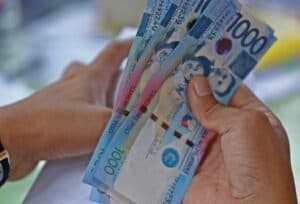
The Philippine peso is expected to maintain a sideways movement against the US dollar this week, likely staying within the P61 range, as traders monitor global oil price fluctuations and await key economic data releases. On Friday, the peso surged by 32 centavos, closing at P61.24 per dollar from P61.56 on Thursday, marking its strongest finish in over a month since June 29, according to data from the Bankers Association of the Philippines.
This weekly gain was significant, with the peso rising 60.7 centavos from its all-time low of P61.847 recorded on July 24. A trader interviewed by phone attributed the peso’s recent strengthening to a correction in the US dollar following the release of weaker-than-expected US gross domestic product (GDP) and personal consumption expenditure (PCE) data. Additionally, a sharp decline in the Japanese yen, influenced by interventions from the Bank of Japan and the US Treasury, contributed to the dollar’s correction.
Rizal Commercial Banking Corp. Chief Economist Michael L. Ricafort noted that uncertainties surrounding the implementation of the P85 minimum wage increase in the National Capital Region (NCR) also lent support to the peso. Labor Secretary Francis N. Tolentino announced plans to seek legal remedies to overturn a court-ordered temporary freeze on the wage hike, which suspended the initial P60 increase effective July 25, with an additional P25 scheduled for January 2027. The government argues that the wage adjustment followed due process.
Looking ahead, market participants expect the peso to trade between P61 and P61.50 per dollar this week as geopolitical developments in the Middle East remain a key factor. Ricafort projects a slightly narrower range of P61 to P61.60. Other important influences include upcoming Philippine economic indicators such as July inflation figures and second-quarter GDP data, alongside US economic reports.
The trader highlighted that a weaker Philippine GDP could put downward pressure on the peso, but stronger-than-expected US nonfarm payroll (NFP) data might limit the peso’s decline. A recent BusinessWorld poll of 21 economists and analysts forecasts a median GDP growth rate of 2.8% for the April-to-June quarter. This would match the 2.8% growth recorded in the first quarter but fall short of the 5.4% expansion seen in the same period last year.
If the forecast holds, the average GDP growth for the first half of 2026 would be 2.8%, below the government’s full-year target range of 3.5% to 4.5%. The Philippine Statistics Authority is scheduled to release the official GDP data on Friday, August 7, which will likely influence peso trading dynamics further.
In summary, the peso’s recent rebound from historic lows reflects a combination of external factors such as US economic data and currency market interventions, as well as domestic issues like wage policy uncertainties. The currency’s near-term trajectory will depend heavily on global oil prices, geopolitical developments, and the upcoming economic reports from both the Philippines and the United States. Market watchers will be closely observing these variables to gauge the peso’s direction in the coming days.