
Polish Prime Minister Confirms Russian Missile Likely Crashed in Eastern Poland
AI-assisted original article by 1news, based on reporting from GMA News Online. Featured image credited to the source.
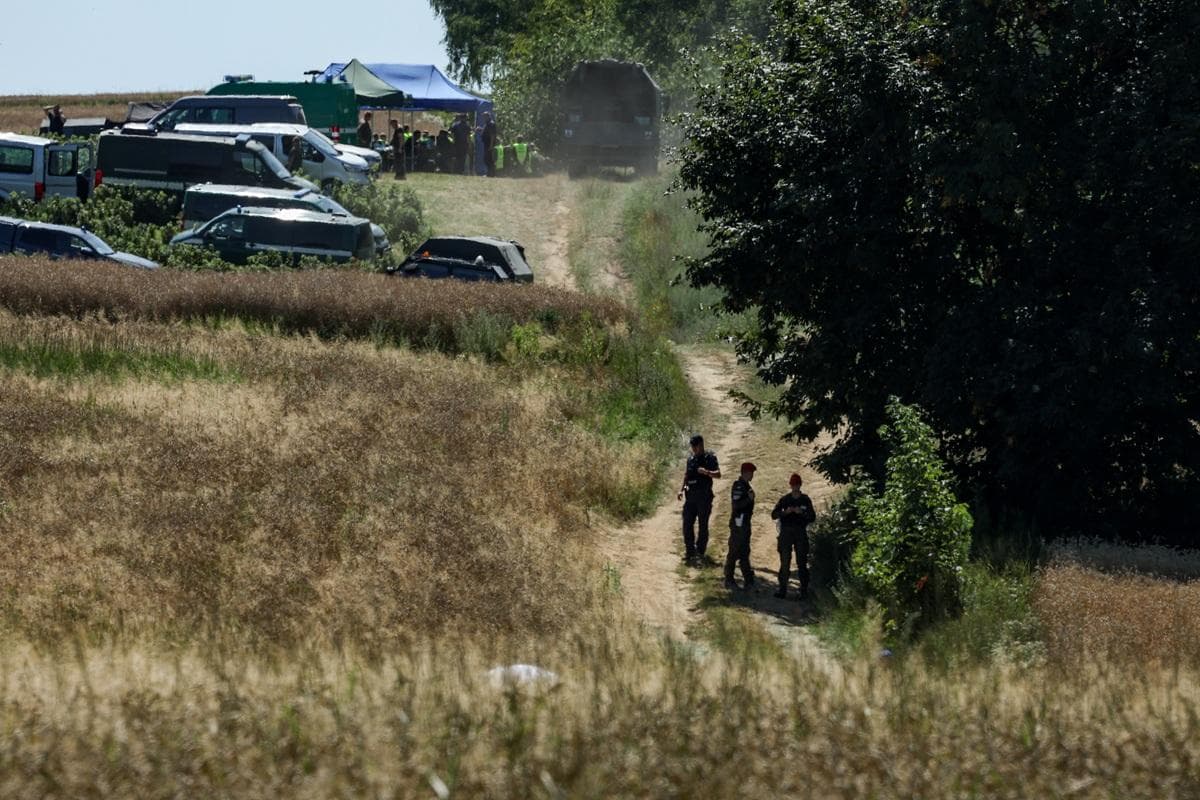
An object that fell in eastern Poland overnight is believed to be a Russian missile, Polish Prime Minister Donald Tusk announced Thursday after authorities discovered a crater and scattered debris in a field following reports of an explosion. The incident occurred near the village of Tarnawa-Kolonia, located just over 100 kilometers from the Ukrainian border.
This event marks the latest in a series of airspace violations along NATO's eastern flank, including incursions in Romania and the Baltic states, raising concerns about the conflict in Ukraine potentially spilling over into alliance territories. The missile crash coincided with Russian airstrikes in neighboring Ukraine that killed at least eight people and extended as far west as the city of Lviv.
Poland responded by scrambling fighter jets to secure its airspace amid the ongoing attacks. Tusk convened an emergency meeting where he stated that all indications pointed to the object being a Russian Kh-101 missile. However, he emphasized that Warsaw sought to be completely certain about the missile's type and origin before making definitive claims.
The Kh-101 is an air-launched cruise missile capable of flying over 2,500 kilometers (approximately 1,553 miles). Military experts note it has been a primary weapon in Russian missile strikes on Ukraine since the full-scale invasion began in 2022. Tusk reassured the public that there was no direct threat to Poland because the missile landed in an uninhabited area. Polish forces were prepared to shoot it down had it continued its flight toward populated regions.
Following the discovery, Tusk personally visited the crash site near Tarnawa-Kolonia. He stated there was no reason to believe Poland was the intended target. Ukrainian fighter pilots had reportedly attempted to intercept missiles approaching the Polish border, underscoring the tense security situation in the region.
Tusk also reaffirmed Poland's commitment to supporting Ukraine, indicating that his government would consider providing additional aid, including more Patriot missile defense systems. This stance comes despite recent strains in bilateral relations due to historical disputes.
Ukraine's Foreign Minister Andrii Sybiha earlier confirmed on social media that a Russian Kh-101 cruise missile had crossed into Polish territory. The Russian embassy in Warsaw had not responded to requests for comment at the time of reporting.
NATO Secretary General Mark Rutte communicated with Tusk regarding the incident, describing it as another reckless act by Russia and a dangerous consequence of its war against Ukraine. NATO and Poland activated their air and ground defenses in response to the missile incursion.
The missile impact created a crater approximately 10 meters (33 feet) wide in farmland about two kilometers from residential buildings, according to Poland's interior ministry and local authorities. Residents near the crash site reported hearing aircraft overhead and windows shaking at the time of the explosion.
Poland's armed forces detected the object entering Polish airspace at 3:40 a.m. local time (0140 GMT) before it disappeared from radar shortly thereafter. An Mi-24 helicopter was dispatched to the crash site following police reports of a loud bang, where officials confirmed the presence of the crater and debris.