
Pope Leo XIV Expresses Deep Affection for U.S. but Emphasizes Universal Role as Pontiff
AI-assisted original article by 1news, based on reporting from GMA News Online. Featured image credited to the source.
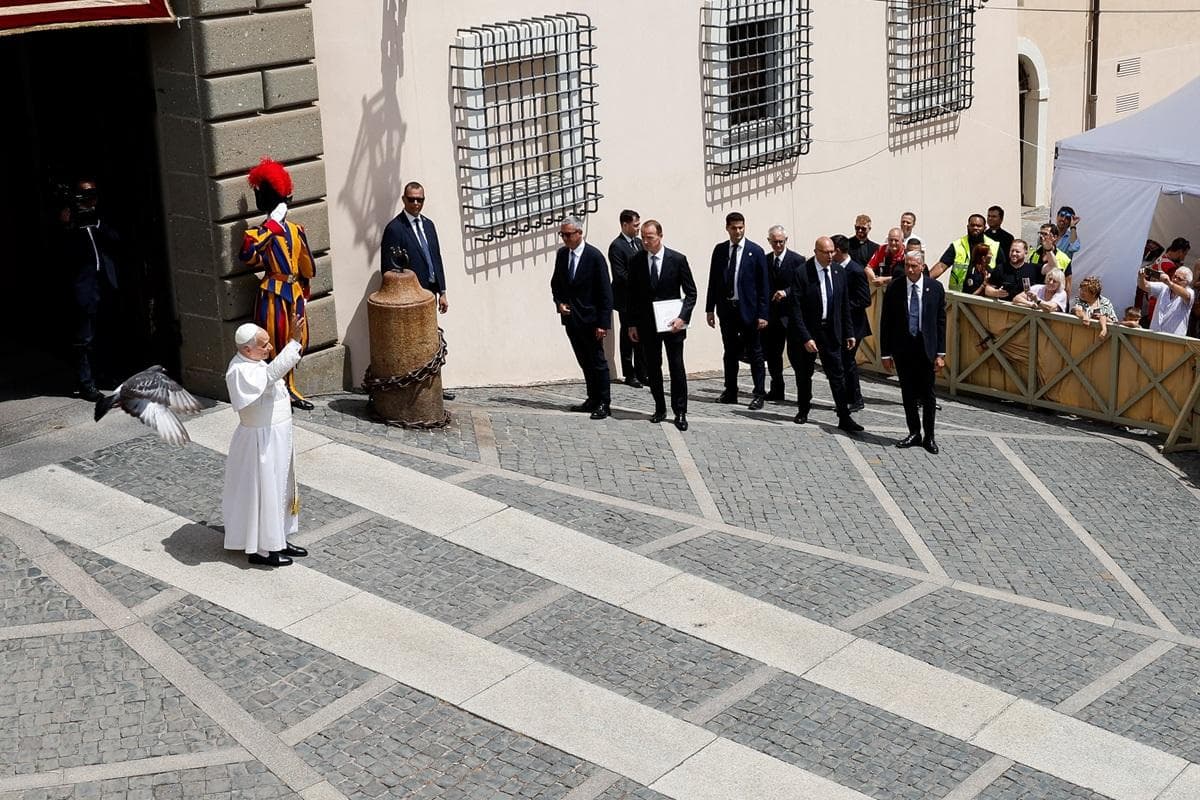
Pope Leo XIV, the first pontiff born in the United States, conveyed his profound affection for America while underscoring his primary identity as the leader of the global Catholic Church. In a rare interview with NBC, conducted on the sidelines of a prayer event at Castel Gandolfo, the pope described himself as "the pope who happens to be American," highlighting the universal nature of his mission beyond national affiliations.
The 70-year-old pontiff, born in Chicago, spoke candidly about his connection to the United States, acknowledging his great love for the country and its foundational principles. He emphasized that his role as pastor of a universal church requires him to address people worldwide, transcending national boundaries. Having spent nearly two decades as a missionary in Peru, Pope Leo XIV brings a global perspective to his leadership.
When asked about what he admires most about America, the pope cited numerous aspects, particularly the nation's commitment to freedom and opportunity. He praised the United States for its historical openness to immigrants, noting that his own grandparents were among those who came to America seeking a better life. This personal connection to immigration informs his appreciation of the country’s diverse heritage.
Pope Leo also reflected on the complex history of his family, mentioning that on his mother’s side, there were ancestors who were both slaves and slave owners. This acknowledgment points to the nuanced and often painful history that shapes the American experience and the ongoing journey toward reconciliation and justice.
Throughout his early papacy, Pope Leo has continued the advocacy for migrants that characterized his predecessor’s tenure. He has openly criticized policies such as the Trump administration’s immigration clampdown, describing them as "inhuman." This stance has occasionally sparked tension, notably a public rift earlier this year between the pope and then-President Donald Trump, which attracted global media attention and raised concerns about its impact on Catholic voters in the United States.
On July 4th, coinciding with American Independence Day, Pope Leo visited the Italian island of Lampedusa. The island is a critical entry point for migrants crossing the Mediterranean from Africa, many of whom face perilous journeys. During his visit, the pope called for greater tolerance and protection for these vulnerable individuals, emphasizing the moral imperative to safeguard human dignity.
Although no official visit to the United States has been scheduled, Pope Leo expressed hope to travel there soon. He mentioned that while plans are not yet finalized, he looks forward to engaging with American Catholics and the broader public in the near future.
The interview took place during a special event at Castel Gandolfo celebrating the 800th anniversary of the death of St. Francis of Assisi. The occasion featured a concert led by Italian tenor Andrea Bocelli, accompanied by a choir of young singers from around the world. The program included performances of "Amazing Grace" and the hymn "Panis Angelicus," underscoring themes of peace and unity that resonate with the pope’s message.
Pope Leo XIV’s reflections reveal a leader deeply connected to his American roots yet firmly committed to his universal pastoral mission. His nuanced views on immigration, history, and identity continue to shape his approach to guiding the world’s 1.4 billion Catholics amid complex global challenges.