
Senate President Gatchalian Says Bills to Remove System Loss Charges Could Take Up to Six Months to Pass
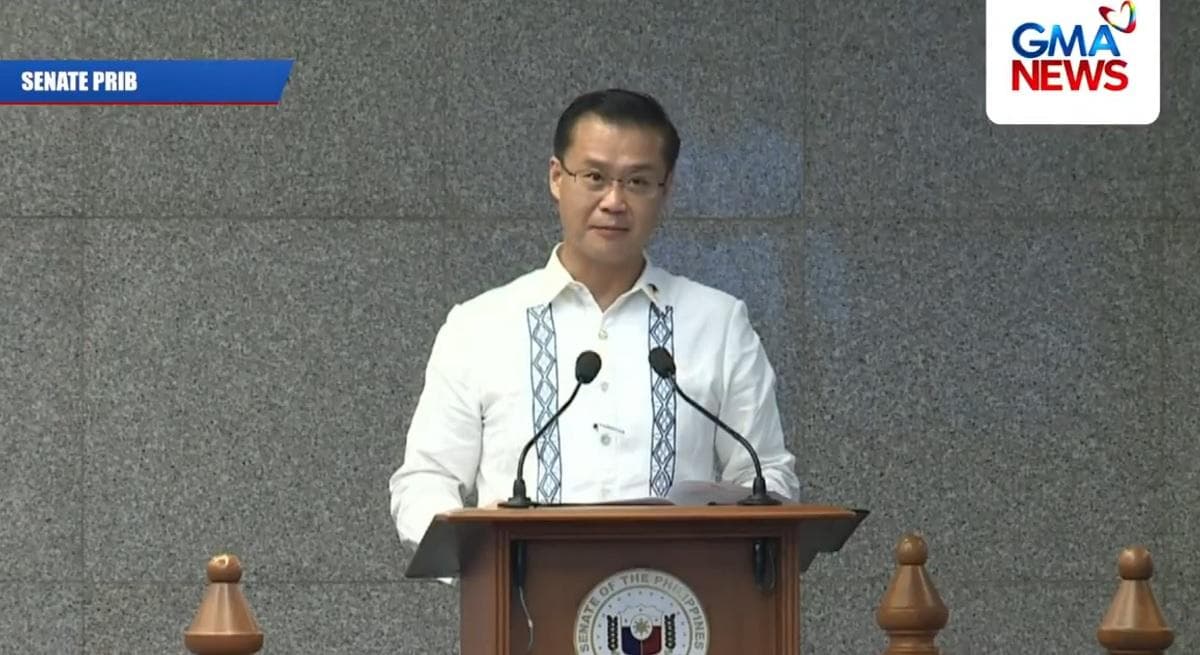
Lawmakers may need up to six months to finalize legislation aimed at eliminating system loss charges from electricity bills, Senate President Sherwin Gatchalian said Sunday. The proposed measures follow President Ferdinand "Bongbong" Marcos Jr.'s directive to stop passing these charges, including the associated value-added tax (VAT), onto consumers.
Gatchalian noted that there is already a consensus among key stakeholders, including the President, the House of Representatives, and the Senate. He highlighted that eight senators have filed bills to abolish the system loss charge, which he believes could be resolved within three to six months. This timeline reflects the legislative process required to amend the Electric Power Industry Reform Act (EPIRA) accordingly.
Several senators, including Senate President Pro-tempore Vicente “Tito” Sotto III, Senator Erwin Tulfo, and Senator JV Ejercito, have filed similar measures in the upper chamber. On the House side, Navotas City Representative Toby Tiangco and Quezon City 5th district Representative Patrick Michael Vargas have also introduced comparable bills.
The system loss charge currently allows distribution utilities to recover a portion of electricity lost during transmission and distribution from end-users. This practice is authorized under existing laws such as the EPIRA and Republic Act No. 7832, which addresses electricity pilferage and theft of transmission materials. System loss typically accounts for a significant percentage of monthly electric bills and is subject to a 12% VAT, further increasing consumer costs.
During his fifth State of the Nation Address, President Marcos urged Congress to amend the EPIRA to stop the inclusion of system loss charges and the accompanying VAT in consumer bills. The Department of Energy, however, has indicated that implementing this directive may take at least a year, citing the complexity of the transition.
Gatchalian emphasized that the Energy Regulatory Commission (ERC) will play a crucial role in ensuring that once the system loss charge is removed, the costs are not concealed under other billing items. He identified the computation of system loss and the issuance of regulations requiring distribution utilities to absorb these losses as the biggest challenges.
He expressed concern that without proper regulation, utilities might hide system loss costs within other charges on electricity bills, which would undermine the reform's intent. Gatchalian described the ERC as the main bottleneck, as it must issue clear regulations to prevent such cost-shifting.
The ERC has expressed support for President Marcos' proposal to amend the EPIRA and eliminate system loss charges from consumer bills. In a statement, the commission affirmed its commitment to work closely with Congress, the Department of Energy, industry stakeholders, and other government agencies to advance the necessary legal and regulatory reforms.
Meanwhile, the Manila Electric Company (Meralco), the country's largest power distributor, has called for thorough discussions regarding the proposal. Meralco highlighted concerns about the potential impact on the operational and financial health of power distribution utilities if system loss charges are removed without a clear plan for cost absorption.
As the legislative process unfolds, stakeholders will need to balance consumer welfare with the sustainability of power distribution services. The proposed bills aim to protect consumers from bearing system loss costs while ensuring the stability of the electricity sector. The timeline suggested by Gatchalian indicates that a resolution could be reached before the end of the year, provided that regulatory and legislative hurdles are addressed effectively.
AI-assisted original article by 1news, based on reporting from GMA News Online. Featured image credited to the source.