
Ukraine Intensifies Campaign to Isolate Crimea Amid Growing Civilian Hardships
AI-assisted original article by 1news, based on reporting from INQUIRER.net. Featured image credited to the source.
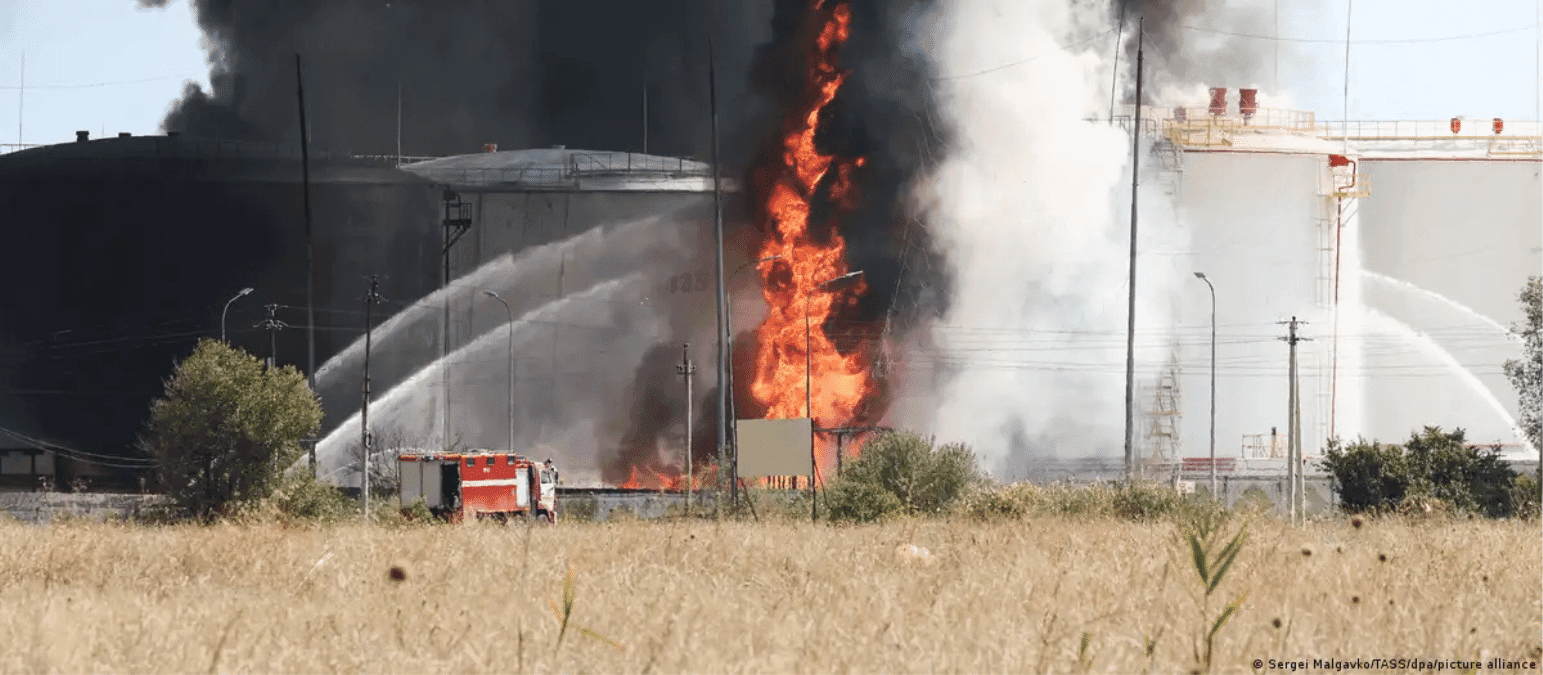
Ukraine has escalated its military operations aimed at isolating Crimea, the peninsula annexed by Russia in 2014, by targeting key supply routes and infrastructure supporting Russian forces and the civilian population. Ukrainian forces have employed long-range drones to strike transports along the M14 highway, which connects the Russian city of Rostov-on-Don to Melitopol in occupied southern Ukraine. Additionally, Ukraine is attacking Russian shadow fleet vessels in the Sea of Azov and the Black Sea, as well as energy facilities critical to Russian military operations.
Commander Robert “Magyar” Brovdi, who leads Ukrainian unmanned systems forces, reported that in the past month alone, Ukrainian strikes have hit 196 Russian ships and over 100 energy facilities, though these figures have not been independently verified. These attacks are part of a broader strategy to sever Crimea’s logistical links to mainland Russia and disrupt Russian military capabilities in the southern theater.
The impact of these operations extends beyond military targets, severely affecting civilian life in Crimea. Fuel shortages have become acute, with fuel coupons issued at the end of May running out within 24 hours, leading to gasoline being traded on the black market. In response to ongoing disruptions in electricity, water supply, and communications, a state of emergency was declared in Crimea, particularly in Sevastopol.
Residents like Nina, a pensioner near Feodosiya in southeastern Crimea, described the hardships caused by frequent power outages and fuel scarcity, which have disrupted cooking and public transportation. Her greatest concern is the prospect of enduring winter without reliable electricity. In northern Crimea, where power cuts have been longest, residents like Ivan have faced days without access to fuel, except for police, officials, and medical personnel. The resulting paralysis has left vehicles stranded and people uncertain about how to travel.
The shortages have also affected local commerce. Ivan noted that most shops no longer stock perishable goods such as dairy, fish, and meat because refrigeration is unreliable. Only a few shops with generators remain open, but they charge significantly higher prices. Volunteer efforts, such as those led by blogger Olena Gerasimenko in Simferopol, have sought to provide drinking water to those affected by power outages, including hospitals and kindergartens. However, complaints persist about inadequate support from Russian-installed authorities.
Ukraine’s campaign focuses on disrupting the small Russian tankers and tugboats that ferry oil to larger vessels and supply fuel to Crimea. Parallel attacks have targeted transformer substations to degrade the peninsula’s power infrastructure. Despite this, Commander Brovdi emphasized that Ukraine is deliberately sparing the Kerch Bridge, which connects Crimea to Russia’s Krasnodar region. He explained that the bridge is maintained as an escape route for civilians, while the goal remains to cut off Russian military supplies and reinforcements, effectively crippling their operations in the region.
Military expert Ivan Kyrychevskyi, serving in a Ukrainian drone unit, highlighted the strategic importance of these air attacks for frontline operations. He explained that pressuring Russian supply lines in southern Ukraine, especially through Crimea, is essential to preventing Russian advances near Zaporizhzhia. The blockade of shipping in the Sea of Azov and Black Sea serves the same purpose, as Crimea has long functioned as a secure base for Russian offensives in southern Ukraine.
Pavlo Narozhnyi, a Ukrainian military analyst and founder of the charity Reactive Post, described Crimea as a massive military base critical to Russian forces in Kherson and Zaporizhzhia. He noted that Russian logistics have traditionally relied heavily on the peninsula, but Ukraine’s attacks on the M14 highway and maritime transport near the Crimea Bridge are now severing these supply lines. This strategy isolates not only Crimea but also Russian troops in southern Ukraine.
Narozhnyi further explained that approximately three million people in Crimea depend on Russia for supplies. The destruction of a thermal power station that once provided up to 60% of Crimea’s electricity, combined with interrupted oil product deliveries, has already caused significant difficulties for civilians. He warned that these problems are expected to worsen in the coming fall and winter months, when heating demands increase, posing additional challenges for Russian authorities.
Sidharth Kaushal of the Royal United Services Institute in London noted that attacks on power stations do not necessarily violate international law if the facilities have military significance and the strikes adhere to proportionality principles. Ukrainian experts confirmed that the targeted energy infrastructure primarily supports military installations. Kaushal suggested that Ukraine’s comprehensive blockade strategy could eventually pressure Moscow into negotiating a ceasefire.
Commander Brovdi acknowledged the hardships faced by Crimean residents and apologized for the restrictions on energy, water, and communications. He compared their situation to that of Ukrainians living in cities like Kharkiv, Dnipro, Sumy, Zaporizhzhia, Nikopol, and Kherson, which have also endured daily attacks. Brovdi’s remarks underscored the difficult balance Ukraine seeks between weakening Russian military capabilities and minimizing civilian suffering in the contested region.