
Wildfires and Haze in Indonesian Borneo Threaten Health, Education, and Resources
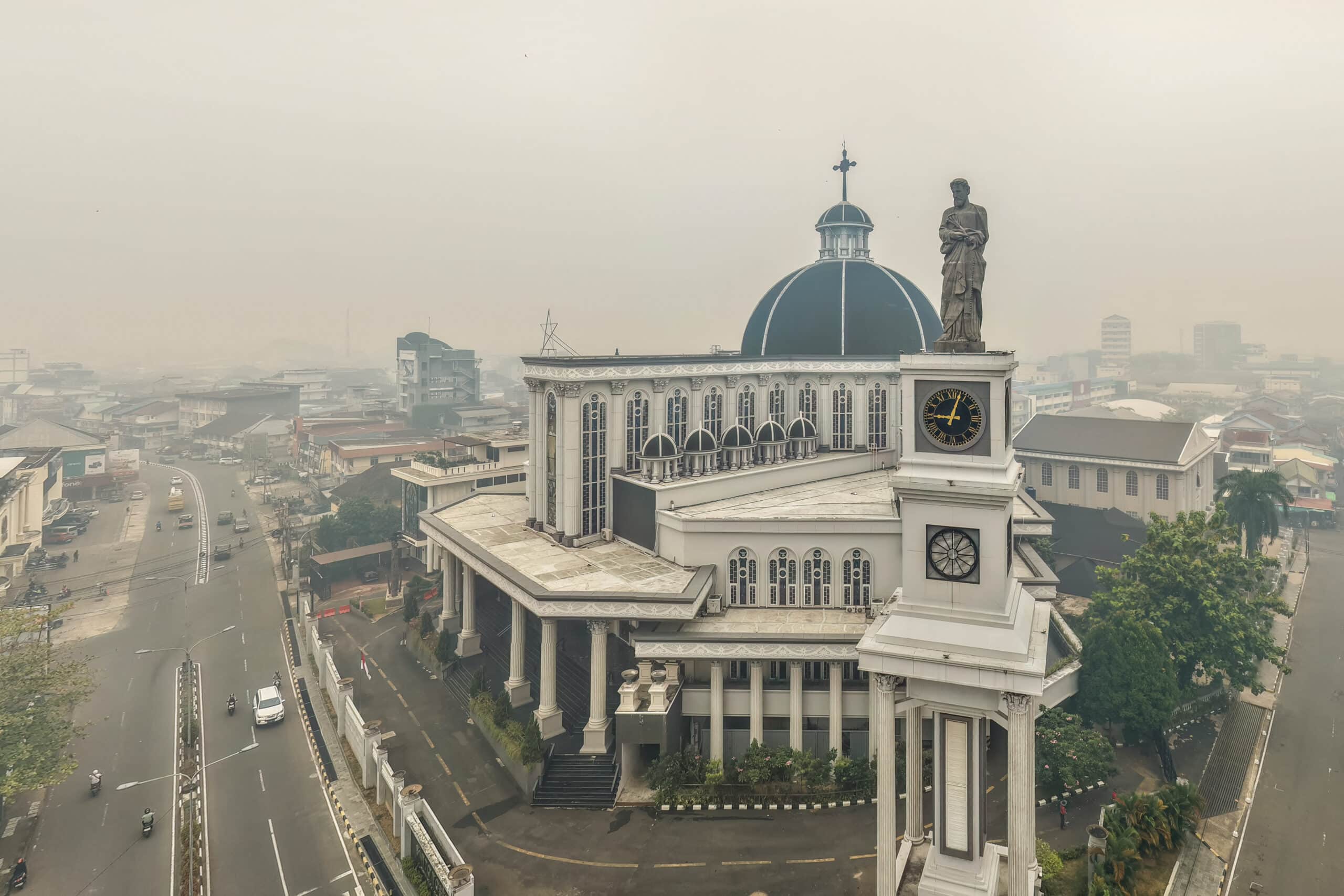
Wildfires sweeping across the Indonesian portion of Borneo are producing thick haze that is severely affecting communities locally and as far away as Malaysia. The fires, exacerbated by one of the most intense El Niño droughts in decades, have created a crisis that threatens millions of people’s access to clean air, water, and education.
In West Kalimantan province, one of the hardest-hit areas, the provincial capital Pontianak has endured weeks of hazardous air quality. The vice principal of a junior high school in Pontianak, Syarifah Hatifah, expressed concern that prolonged school closures due to the haze are causing students to fall behind. Her school, with nearly 600 pupils, is in the third week of its second closure this fire season, marking the longest disruption in her 30-year career.
Across West Kalimantan, hundreds of schools have been closed indefinitely, affecting approximately 200,000 students who are now learning from home, according to the provincial education ministry. While the closures aim to protect children’s health by keeping them indoors away from polluted air, many students face challenges with remote learning due to unstable internet connections, lack of computers, and frequent power outages. Teachers continue to conduct online classes from empty classrooms without air purifiers and without masks to ensure clear communication.
Health concerns are mounting as well. Iwansyah, head of the health agency in Kubu Raya regency, which serves about 700,000 people across 123 villages, reported that over 1,400 residents have been treated or hospitalized for acute respiratory infections so far in September. The agency distributes roughly 1,000 masks daily but is running low on supplies and has requested additional masks from the provincial government. They also monitor cases of diarrhea linked to reduced access to clean water amid the drought, with 225 cases recorded this month.
The health agency is preparing for a potentially severe situation in the coming weeks, as Indonesia’s meteorological agency BMKG forecasts little relief from the dry conditions. Efforts include stocking medicines and equipment at clinics and intensifying air and water quality monitoring. Officials hope for rain to arrive between now and November to alleviate the crisis.
On the ground, firefighting efforts face significant challenges. Yonas, deputy head of the Lintang Batang hamlet near Pontianak, described how local residents have pooled resources to purchase water pumps, hoses, and other firefighting equipment. However, shortages of hoses and protective gear, including masks, hamper their ability to control peatland fires that have been burning for days, releasing thick, acrid smoke.
Volunteer firefighters often resort to using buckets and whatever tools are available, but these are insufficient against the scale of the blazes. The smoke poses particular risks to vulnerable groups such as children, pregnant women, the elderly, and people with asthma. Scientific measurements confirm that the haze contains toxic fine particulate matter at levels far exceeding World Health Organization safety limits, making the air extremely hazardous to residents’ health.
The combined impact of prolonged wildfires, hazardous haze, and drought-induced water shortages is straining the resilience of communities in Indonesian Borneo. Education disruption, rising respiratory illnesses, and firefighting resource shortages underscore the urgent need for coordinated relief and mitigation efforts. Residents and officials alike are hoping for timely rainfall to help extinguish the fires and clear the air, but the outlook remains uncertain as the dry season continues to deepen.
AI-assisted original article by 1news, based on reporting from INQUIRER.net. Featured image credited to the source.